Subject: Fall Resources

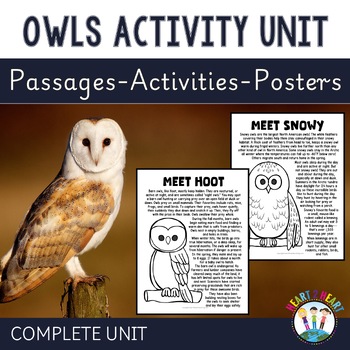
  • Give A Hoot for Owls: A Non-Fiction Activity Pack

    Give A Hoot for Owls: A Non-Fiction Activity Pack

    Students will love learning all about owls including Barn Owls and Snowy Owls with this creative and interactive pack!

    Owls are amazing birds! Did you know that owls are one of the oldest species in existence? Fossils of owls have been found dating back over 60 million years ago. People in countries from all over the world have always had a fascination with owls. Many cultures have made up stories or myths about owls for thousands of years.

    In this activity pack, students will learn all about Barn Owls, Snowy Owls, Life Cycle of an Owl, body parts, and how owls help humans.

    This unit includes many interactive activities and learning opportunities for students including:
    ✔ Informational articles
    ✔ Mini-booklet all about owls
    ✔ Compare/Contrast Activity
    ✔ Life cycle of a barn owl
    ✔ A Life Cycle Chart
    ✔ Color the Owls with True Facts
    ✔ Create an Owl Mini-booklet
    ✔ Owl Organizer
    ✔ Vocabulary Posters
    ✔ Spotlight on Vocabulary
    ✔ Owl Writing Project
    ✔ Great for the Fall Season
    ✔ Common Core Aligned

    Students will meet two owl characters:
    ✔ Meet Hoot (a barn owl)
    ✔ Meet Snowy (a snowy owl)

    There are three main activities in this pack:
    Vocabulary:
    Introduce the eight vocabulary words with the real-life photo posters included. You could post these posters around the classroom and have students travel around to match up and define the words in their flip flaps or use as a center activity. These posters are excellent for a bulletin board display too!

    Reading:
    Next, have students read the informational articles all about owls, the life cycle of an owl, body parts, and more. Read the character studies where they will Meet Hoot, a barn owl and Meet Snowy, a snowy owl. The informational articles are written in the form of a mini-booklet with questions and scenes for students to connect, color, and assemble. Pages can be stapled at the top to make a full-sized booklet or be cut in half to create a half-page mini-book. See product pictures for ideas.

    Activities:
    Have students complete the Barn Owl Mini-booklet, organizer, and writing activity to complete their study on owls. These make excellent activities to do independently at centers. They can use the articles as a reference source to help them complete the pages of the Mini-booklet. Lastly, they cut, color, and assemble the Mini-booklet. Mini-booklets can be glued or stapled inside their interactive notebooks, file folder, or a 12 x 18 piece of construction paper folded like a book cover. Students could then decorate the cover of the booklet. Hoot! Hoot!
  • All About Bats Nonfiction Reading Passages Bat Life Cycle & Bat Facts Worksheets

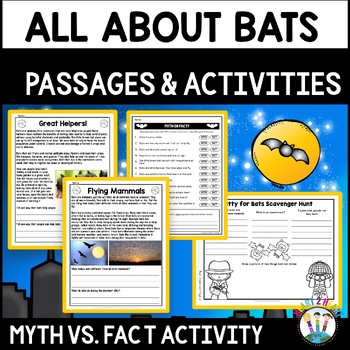
    All About Bats Nonfiction Reading Passages Bat Life Cycle & Bat Facts Worksheets

    All About Bats is a complete nonfiction bat unit for 3rd and 4th grade. This no prep printable packet is built around 4 nonfiction reading passages about bats with real life photos, a bat life cycle activity, myth vs. fact activity, vocabulary posters and activities, and a fiction story with comprehension questions.

    What’s Included:
    • 4 nonfiction reading passages

    • Myth vs. Fact Activity

    • Comprehension Questions
    • Bat life cycle activities
    • Research organizer for what bats eat, live, and how mammals are alike
    • Compare and contrast activities
    • Meet three bats: Buddy Boo the little brown bat, Berry Boo the fruit bat, and Bitty Boo the western pipistrelle
    • An Uninvited Guest, a fiction story about a bat that gets into the house
    • Cause and effect activity

    • Unit Test

    • 4 Writing Prompts: Narrative, Informative and Opinion Writing
    • Vocabulary posters and activities
    • A Flip Book
    • Complete Answer Keys

    Why You’ll Love It:

    • Zero prep. Print it and teach it today.
    • Nonfiction and fiction in one unit

    • Integrate science and reading at the same time
    • Black and white printing friendly

    • Myth vs. Fact Activity about Rabies
    • Works for whole group, small group, science centers, early finishers and sub plans

  • Fall Activities: Pumpkin Activities for Science Centers

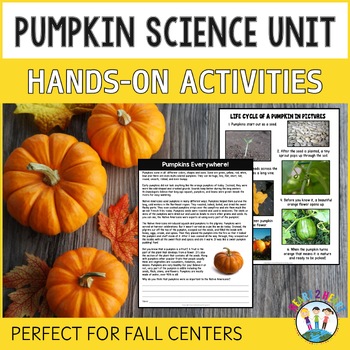
    Fall Activities: Pumpkin Activities for Science Centers

    Pumpkins come in all different shapes, colors, and sizes just perfect for students observation and exploration. In this unit, students will predict, explore, and estimate all about their chosen pumpkin(s).

    By combining a variety of reading, math skills, and scientific observation skills students will learn all about pumpkins. These activities are great for fall centers! Your students will love this fun hands-on activity pack!

    Students will learn all about pumpkins including:

    ✔ Life cycle of a Pumpkin

    ✔ Parts of a Pumpkin

    ✔ Fruit or Vegetable?

    ✔ Homemade Pumpkin Treats

    This unit includes many interactive activities including:

    ✔ Meet Alexander – a young botanist

    ✔ Summarize How to Grow a Gigantic Pumpkin

    ✔ Create a Pumpkin Facts Mini-booklet

    ✔ Math Task Cards

    ✔ Fruit & Veggie Pocket Sort

    ✔ All About Pumpkins—Fact, and Opinion

    ✔ Mystery Flaps

    ✔ Vocabulary Posters

    ✔ Spotlight on Vocabulary

    ✔ Vocabulary Flip Flaps

    ✔ PLUS 6 page Flip Booklet

    There are 3 main activities:

    Vocabulary:

    Introduce the vocabulary words with the real-life photo posters included. You could post these posters around the classroom and have students travel around to define the words in their flip flaps. These posters are excellent for a bulletin board display too.

    Reading:

    Next, have students read the passages and complete the different activities. You could have students work with a partner or in small groups. Putting one article and related activity at each center works well with intermediate students.

    Activities:

    There are lots of activities included in this pack including a 6-page flip book. Have students complete the flip booklet and build it page by page. I usually have them do one page at each center or station. They can use the articles as a reference source to help them complete the pages of the booklet. Lastly, cut, color, and assemble the booklet. Flip up books can be glued or stapled inside their interactive notebooks, file folder, or a 12×18 piece of construction paper folded like a book cover.