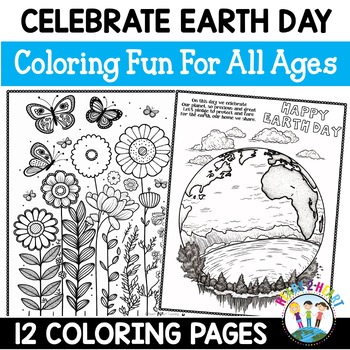
Students will love these Earth Day Doodle Coloring Pages. This pack comes with 12 coloring pages and 4 pages have poems that can be used for National Poetry Month. Coloring activities provide students with time to relax and express themselves creatively.
Topic: Earth
-
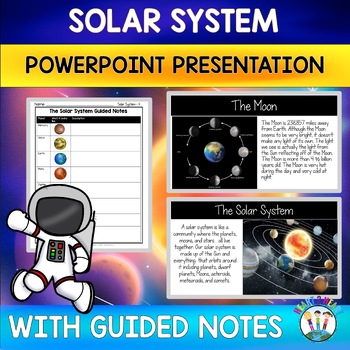
Let’s Explore Our Solar System PowerPoint
Your students will love learning about the Solar System with this creative Solar System PowerPoint Presentation! A solar system is like a community where the planets, moons, and stars all live together.
There are 100 Slides in this PowerPoint Presentation with information about the following:
✔ The Sun
✔ The Moon
✔ Phases of the Moon
✔ The Solar System
✔ Constellations
✔ Mercury
✔ Venus
✔ Earth
✔ Mars
✔ Jupiter
✔ Saturn
✔ Uranus
✔ Neptune
✔ PlutoPlus students will learn about two famous astronauts:
✔ Meet Neil Armstrong
✔ Meet Sally Ride
✔ For Elementary Grades – Second grade, Third grade, Fourth grade
✔ Core Knowledge and Common Core AlignedThis slideshow is geared for 2nd grade, 3rd grade, and 4th-grade students. It has an 8 question activity called “Which Planet is it?” Answers are includes—Perfect to check for understanding or to use as a pop quiz. Plus there are 12 vocabulary words and slides too!
-
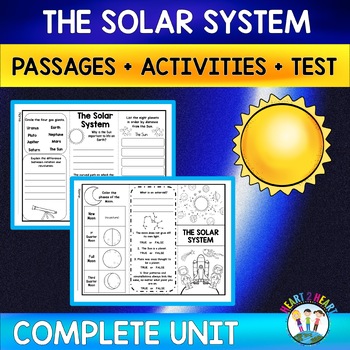
Let’s Explore Our Solar System Activity Pack
With this creative activity pack, your students will love learning about the Solar System. This complete unit includes information about the Solar System, Sun and Moon, moon phases, stars and constellations, Neil Armstrong, Sally Ride, and the Earth’s rotation vs. revolution.
It has leveled reading passages, comprehension questions, hands-on activities, a flip book, fact flaps, vocabulary posters, character studies on Neil Armstrong and Sally Ride, a unit test, answer keys, and much more!
A solar system is like a community where the planets, moons, and stars all live together. Our solar system is made up of the Sun and everything that orbits around it, including planets, dwarf planets, moons, asteroids, meteoroids, and comets. In our solar system, there are eight planets: Earth, Jupiter, Mars, Mercury, Neptune, Saturn, Uranus, and Venus.
There are kid-friendly informational articles about the following:
✔ The Sun
✔ The Moon
✔ Phases of the Moon
✔ The Solar System
✔ Rotation vs. Revolution
✔ The Constellations
✔ Mercury
✔ Venus
✔ Earth
✔ Mars
✔ Jupiter
✔ Saturn
✔ Uranus
✔ Neptune
✔ PlutoPlus students will learn about two famous astronauts:
✔ Meet Neil Armstrong
✔ Meet Sally RideThere are lots of hands-on activities:
- Solar System Chart
- Which Planet is it?
- Exit Slips
- Video links shared from YouTube
- Planet Fact Flaps
- Rotation vs. Revolution Activity
- Phases of the Moon Chart
- Brochure Activity
- Writing Prompts (2)
- Venn Diagrams
- 8 Planet Informational Posters
- Teacher’s Pacing Guide
- Vocabulary Posters
- Vocabulary Flip Flaps
- 9-Page Solar System Flip-Up Booklet
- Spotlight on Vocabulary
- Unit Test
- Answer Keys
There are 3 main activities:
Vocabulary:
Introduce the vocabulary words with the real-life photo posters included. You could post these posters around the classroom and have students travel around to match up and define the words in their flip flaps or use as a center activity. These posters are excellent for a bulletin board display too.Informational Articles:
Have students read the informational articles all about the Solar System with comprehension questions and scenes for students to connect and color. You could have students work with a partner or in small groups or even as a center or learning station activity.Student Activities:
Have students complete the Solar System Flip-Up booklet and build it page by page. The Flip-Up is built so the planets go in order of their relation to the Sun. Each page of the Flip-Up booklet includes a graphic organizer that has students answer questions about that specific planet such as:
✔ How long does it take to turn on its axis?
✔ How long does it take to orbit the Sun?
✔ Where is it in relation to the Sun?
✔ Describe what it looks like?
✔ Tell one interesting fact
✔ And more!All the answers for each planet are found in the related articles. I usually have them do one page at each center or learning station. They can use the articles as a reference source to help them complete the pages of the booklet. Lastly, they cut, color, and assemble the booklet. Flip-Up books can be glued or stapled inside their interactive notebooks, file folder, or a 12×18 piece of construction paper folded like a book cover.
There’s also a Which Planet is it? Activity, Solar System Quiz, and Venn Diagrams to compare the planets.
Plus, there are 8 colorful Planet Posters with lots of diagrams, additional info, and facts about each planet to help students visualize the planets and/or to use as part of a learning station, research project, or for an awesome bulletin board display.
Have fun teaching the Solar System with this complete and creative non-fiction resource with 65 pages in all!
CCSS: Earth Science
Meets S4E1: Students will compare the contrast the physical attributes of stars, star patterns, and planets.
b. Compare the similarities and differences of planets to the stars in appearance, position, and number in the night sky.
c. Explain why the pattern of stars in a constellation stays the same, but a planet can be seen in different locations at different times.Meets S4E2: Students will model the position and motion of the Earth in the solar system and will explain the role of relative position and motion in determine sequences of the phases of the moon.
a. Explain the day/night cycle of the Earth.
b. Explain the sequence of the phases of the Moon.
c. Demonstrate the revolution of the Earth around the Sun and the Earth’s tilt to explain the seasonal changes.
d. Demonstrate the relative size and order from the Sun of the planets in the solar system.
✔ For Elementary Grades – Second grade, Third grade, Fourth grade, Fifth grade
✔ Great for Core Knowledge
✔ Common Core Aligned -
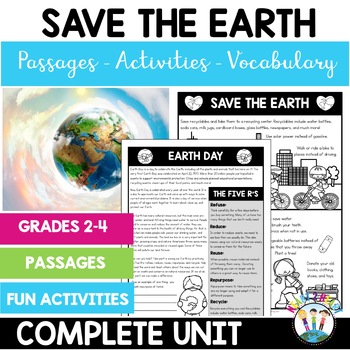
Save Our Earth! Earth Day Activity Pack
Celebrate Earth Day with this Earth Day Activity Pack! This pack has been newly updated to include the Five R’s, new vocabulary posters, and lots of hands-on activities.
Your students will love celebrating Earth Day with this creative and interactive non-fiction resource. This activity pack includes kid-friendly reading passages about:
✔ What is Earth Day?
✔ Ways to Save Our Earth
✔ How You Can Help
✔ The Five R’sThe first Earth Day was celebrated on April 22, 1970. Earth Day was created to make people aware of the importance of keeping planet Earth healthy and clean. There are many ways that students can help protect our Earth too. Learn all about it with this Earth Day Activity Pack!
This Earth Day Activity Pack also includes Engaging Hands-on Student Activities:
✔ Scavenger Hunt
✔ Earth Day Poster
✔ Earth Day Flip Book (5 pages)
✔ Mini-booklet (12 pages)
✔ Pretzel Activity Page
✔ Writing Prompts
✔ Vocabulary Posters
✔ Spotlight on Vocabulary -
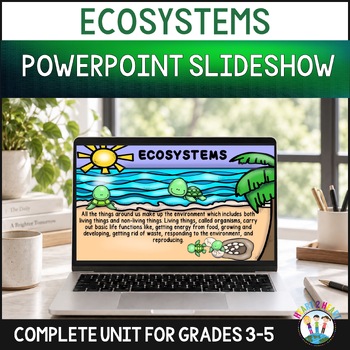
Ecosystems Powerpoint
This 100 slide presentation is artfully designed to complement your unit on Ecosystems!
An ecosystem can be huge like the Amazon Rainforest or as small as a puddle in your backyard. There are both living and non-living things make up an ecosystem.
This unit is geared for 3rd grade, 4th grade, and 5th-grade students. It includes information about the following environmental science topics:
✔ Types of Ecosystems (Micro, Messo, Biomes)
✔ Biomes: Aquatic and Terrestrial
✔ Abiotic and Biotic
✔ Herbivores, Carnivores, and Omnivores
✔ Natural Cycles of Earth
✔ The Balance of Nature
✔ Producers, Consumers, and Decomposers
✔ Photosynthesis
✔ Animals Basic Needs
✔ Food Webs & Chains
✔ For Upper Elementary Grades – Third grade, Fourth grade, Fifth grade
✔ Common Core AlignedThis Ecosystems Slideshow Presentation includes a:
100 slide PowerPoint all about Ecosystems—with colorful clipart and real-life photos. There are slides on each concept with comprehension questions and vocabulary slides, too! -
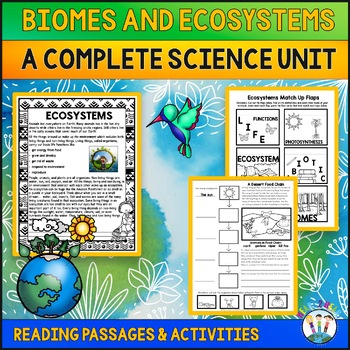
Biomes and Ecosystems Worksheets 3rd-5th Grade Food Chains Webs Photosynthesis
3rd, 4th, 5th Grade Ecosystems reading passages, activities, and worksheets. With this BEST SELLER, kids will learn all about the different types of ecosystems, biomes, food chains, food webs, photosynthesis, producers, consumers, decomposers, animal needs, herbivores, carnivores, and omnivores, and how they interact with each other.
Topics Covered:
- Types of Ecosystems (Micro, Meso, Biomes)
- Biomes: Aquatic and Terrestrial
- Abiotic and Biotic
- Herbivores, Carnivores, and Omnivores
- Natural Cycles of Earth
- The Balance of Nature
- Producers, Consumers, and Decomposers
- Photosynthesis
- Animals Basic Needs
- Food Webs and Food Chains
With Lots of Engaging Activities
- Tri-fold (Brochure) Organizers for INBs
- Comprehension Questions
- Flipbook (5-pages)
- Photosynthesis Sequence Activity
- Producers, Consumers, Decomposers Notebook Flaps
- Ecosystems Match-up Flaps
- Video Links shared on YouTube
- Cloze Passages
- Vocabulary Posters
- Vocabulary Flip Flaps
- Spotlight on Vocabulary
- Rainforest Food Chain Activity
- Desert Food Chain Activity
- Fact or Fiction Activities
- Teacher’s Pacing Guide
- Unit Test (Easel Assessment)
- Answer Keys
- Diagrams for Photosynthesis
- Diagrams for Food Chains
- Plus students will meet a famous environmentalist, John Muir
❤️ Why Teachers Love It:
✅ Easy to Implement – Ready-to-go with pacing guide and answer keys
✅ Cross-Curricular – Builds science knowledge and literacy skills
✅ Supports Diverse Learners – Variety of formats, hands-on, and includes visuals
✅ Encourages Critical Thinking – Students explore cause and effect, interdependence, and food chains
✅ Promotes Environmental Awareness – Helps students understand the importance of balance in nature
Frequently Asked Questions:
Q: What grade levels is this unit best suited for?
A: This unit is ideal for grades 2–4 and can be adapted for 5th graders. The materials include visuals, interactive elements, and leveled support to accommodate diverse learners.Q: Is this unit aligned with science standards?
A: Yes! It aligns with NGSS, CCSS ELA, TEKS, and VA SOL for ecosystems, food chains/webs, producers/consumers/decomposers, and environmental awareness.Q: Can I use this with interactive notebooks?
A: Absolutely! The flipbook, flaps, tri-folds, and match-up activities are all designed for use in interactive notebooks or as stand-alone learning tools.Q: Are answer keys and a pacing guide included?
A: Yes! A full teacher pacing guide and answer keys for all major activities and the unit test are included.Q: Is there resource digital version available?
A: Yes! You can find a DIGITAL version of this resource is available for Google Classroom here.This ecosystem unit is perfect for science centers, whole-group instruction, or independent learning. It’s ideal for grades 3–5 and will save you hours of planning while keeping your students engaged and excited about science.