Topic: Flip Book

  • Rocks and Minerals Complete Unit

    Rocks and Minerals Complete Unit

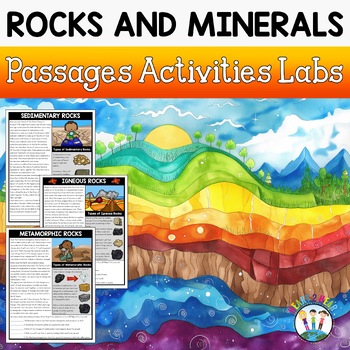
    Rocks and Minerals Rock! This unit has 10 leveled reading passages, organizers, tri-fold brochure activity, unit test (editable), flipbook, vocabulary posters, science labs, comprehension and connection activities, and much more!

    This unit includes many interactive activities and learning opportunities for students with leveled reading passages that focus on:

    • Rocks and minerals
    • Igneous Rock
    • Sedimentary Rock
    • Metamorphic Rock
    • Amazing Minerals
    • Colorful Crystals
    • Layers of the Earth
    • Tectonic Plates
    • Volcanoes
    • The Rock Cycle

    What’s inside:

    • Leveled Reading Passages
    • Teacher’s Pacing Guide
    • Teacher’s Directions & Notes
    • Three Types of Rocks Pocket Sort
    • Three short videos on safeshare.tv
    • Facts About Rocks and Mineral Notebook Flaps
    • Label The Rock Cycle
    • Rocks Rock Tri-fold Booklet
    • Name That Rock or Mineral Activity
    • Label and Color the Layers of the Earth
    • Layers of the Earth Flip Flaps
    • How are Mountains Formed (Tectonic Plates)
    • Science LABS (8)
    • Flip Booklet (5 pages)
    • Mineral Field Guide (4-pages)
    • Unit Test (Editable)
    • Answer Keys

    Plus the vocabulary posters with real-life photos make an attractive bulletin board.

    ✔ Vocabulary Posters

    ✔ Spotlight on Vocabulary Activity

    ✔ Vocabulary Flip Flaps

    ✔ For Elementary Grades – 2nd grade, 3rd grade, 4th grade

    ✔ Great for Core Knowledge

    ✔ Common Core Aligned

    This unit highlights the following key points:

    • How are rocks changed?

    • Explain the difference between erosion and weathering.

    • What are the three types of rocks?

    • What is sediment?

    • How are rocks and minerals related?

    • How is an igneous rock formed?

    • Name and describe three types of igneous rock.

    • How is a sedimentary rock formed?

    • Name and describe three types of sedimentary rock.

    • How is a metamorphic rock formed?

    • Name and describe three types of metamorphic rock.

    • Explain the rock cycle.

    • What is a mineral?

    • How are minerals helpful?

    • How are crystals formed?

    • What are the layers of the Earth?

    • How are mountains formed?

    • Name and describe three types of mountains.

    • What is a volcano?

    • How can a volcano affect our environment?

    There are four main parts of the unit:

    Reading:

    A teacher’s copy of the passages is in color. Read the leveled reading passages about rocks and minerals and complete the organizers. Each passage has comprehension questions to check for understanding. Watch the videos and complete the various hands-on activities in this pack to reinforce learning. These activities work well in small groups, partners, or in stations.

    Students can build the flipbook page by page. I usually have them do one page at each center or station. They can use the articles as a reference source to help them complete the pages of the flip-up. Lastly, they cut, color, and assemble the booklet. Flip-up books can be glued or stapled inside their interactive notebooks.

    Science Labs:

    This unit has 8 labs where students work as geologists to identify two mystery minerals. NOTE: Extra supplies are needed to complete the labs. Please read through the teacher’s directions to prep for the labs.

    Vocabulary:

    Introduce the vocabulary words with the real-life photo posters included. You could post these posters around the classroom and have students travel around to match up and define the words in their flip flaps or spotlight on the vocabulary page. These posters make an excellent bulletin board display in a snap!

    There are lots of activities for differentiation depending on the needs of your students and the time allotted for this unit.

    Be sure to check out the PREVIEW for more information!

    Please know that I spend a lot of time researching, creating, writing, and proofreading my work but even after several revisions there may still be a typo or grammatical error. Please let me know if you find a typo or feel that a correction is needed. Just click on the Ask a Question section or email me at heart2heartteaching@gmail.com versus leaving negative feedback so that I can fix it as soon as possible. I value your input to make my products the highest quality possible. Thank you in advance for your help and support!

    Copyright © Heart 2 Heart Teaching LLC. All rights reserved. This file is intended for classroom and personal use only. Any redistribution or reproduction of part or all of the contents in any form is prohibited other than the following:

    **You may print for your personal, classroom use, and non-commercial use only.

    **Clipart, graphics, photographs, found inside this product are copyrighted. They may not be extracted from this file without written permission from the original artist(s).
  • Animal Classification Unit with Mammals, Birds, Fish, Reptiles, and Amphibians

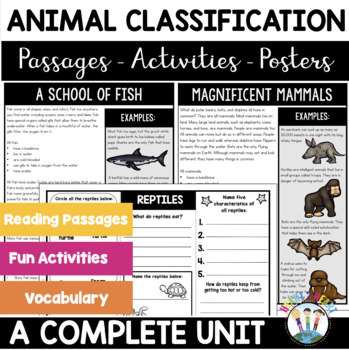
    Animal Classification Unit with Mammals, Birds, Fish, Reptiles, and Amphibians

    Students will love learning all about animals with this fun and engaging resource. This unit includes reading passages, comprehension questions, tri-fold booklets, vocabulary posters, and activities for each of the five animal groups.

    The following animal groups are highlighted in this unit:

    ⭐ Mammals

    ⭐ Birds

    ⭐ Fish

    ⭐ Reptiles

    ⭐ Amphibians

    Plus there are lots of kid-friendly activities:

    • Comprehension Questions

    • Trifold Brochures—one for each of the 5 groups

    • Animal Classification Cards Sorting Activity

    • Animal Chart Diagram

    • Name That Invertebrate

    • Pocket Sort for Vertebrates and Invertebrates

    • Flipbook for 5 groups of vertebrates (6-pages)

    • Flip Fact Flaps

    • Vocabulary Posters

    • Spotlight on Vocabulary

    • Visual Directions

    • Quiz

    • Answer Keys

    There are three main activities:

    Reading:

    Set up a learning station or center for each of the five animal groups.

    For each station print and copy the following:

    ✔ Reading Passages

    ✔ Comprehension Questions

    ✔ Tri-fold Booklets

    Have students read the passages, answer the questions, and complete the tri-fold booklets for each group.

    Activities:

    There are lots of activities to reinforce learning as you progress through the unit:

    • Animal Classification Cards Sorting Activity

    • Animal Chart Diagram

    • Name That Invertebrate

    • Pocket Sort for Vertebrates and Invertebrates

    • Flipbook for 5 groups of vertebrates (6-pages)

    • Flip Fact Flaps

    Vocabulary:

    Introduce the vocabulary words with the real-life photo posters. You could post these posters around the classroom and have the students travel around to write the definitions under the flip flaps in their notebooks. These make an attractive bulletin board in a snap!

    Meets the following learning standards:

    S5L1. Obtain, evaluate, and communicate information to group organisms using scientific classification procedures.

    a. Illustrate how animals are sorted into two groups: vertebrates and invertebrates.

    b.Illustrate how vertebrates are divided into five groups: mammals, birds, fish, reptiles, and amphibians.

    Be sure to check out the PREVIEW for more information

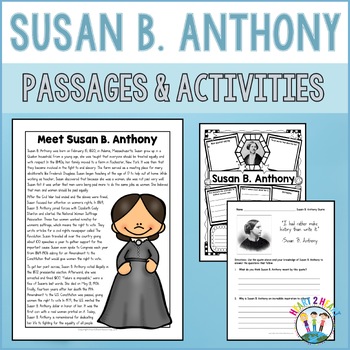
  • The Life Story of Susan B. Anthony Activity Pack

    The Life Story of Susan B. Anthony Activity Pack

    Susan B. Anthony is one of the most influential women in American history. She spent much of her life speaking, working, and fighting for equal rights for everyone. She was also one of the key leaders of the women’s suffrage movement in the United States.

    This biography unit has it all! There are a variety of activities for you to teach about Susan B. Anthony’s life story. This could be a week-long unit or as short as a day or two, depending on time allotted and the needs of your students. There are several ways to use this unit to differentiate for students.

    Activities included:
    ✔ Meet Susan B. Anthony
    ✔ Fact or Fiction Activity
    ✔ Character Mini-Booklet w/Timeline Sorting Activity—fits inside their notebooks!
    ✔ Biography Organizers
    ✔ Famous Quote
    ✔ Character Traits Activity
    ✔ Plus a 5-page Flip Book
    ✔ Quiz
    ✔ Answer Keys
    ✔ Vocabulary Posters for important character traits:
    Ambitious, Confident, Determined

    Reading:
    Have students read the passages where they will meet Susan B. Anthony and learn all about her life. There are also custom-created biography organizers to use for review or for further research.

    Suggestions and Ideas for centers:
    ✔ Have students read the Meet Susan B. Anthony passage OR Life Story passages with scenes and questions. Then answer the questions on the biography organizers.
    ✔ Have students complete the character mini-booklet with timeline dates. These fit nicely inside their notebooks.

  • Let’s Explore Our Solar System Activity Pack

    Let’s Explore Our Solar System Activity Pack

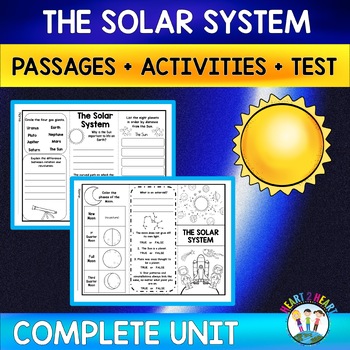
    With this creative activity pack, your students will love learning about the Solar System. This complete unit includes information about the Solar System, Sun and Moon, moon phases, stars and constellations, Neil Armstrong, Sally Ride, and the Earth’s rotation vs. revolution.

    It has leveled reading passages, comprehension questions, hands-on activities, a flip book, fact flaps, vocabulary posters, character studies on Neil Armstrong and Sally Ride, a unit test, answer keys, and much more!

    A solar system is like a community where the planets, moons, and stars all live together. Our solar system is made up of the Sun and everything that orbits around it, including planets, dwarf planets, moons, asteroids, meteoroids, and comets. In our solar system, there are eight planets: Earth, Jupiter, Mars, Mercury, Neptune, Saturn, Uranus, and Venus.

    There are kid-friendly informational articles about the following:
    ✔ The Sun
    ✔ The Moon
    ✔ Phases of the Moon
    ✔ The Solar System
    ✔ Rotation vs. Revolution
    ✔ The Constellations
    ✔ Mercury
    ✔ Venus
    ✔ Earth
    ✔ Mars
    ✔ Jupiter
    ✔ Saturn
    ✔ Uranus
    ✔ Neptune
    ✔ Pluto

    Plus students will learn about two famous astronauts:
    ✔ Meet Neil Armstrong
    ✔ Meet Sally Ride

    There are lots of hands-on activities:

    • Solar System Chart
    • Which Planet is it?
    • Exit Slips
    • Video links shared from YouTube
    • Planet Fact Flaps
    • Rotation vs. Revolution Activity
    • Phases of the Moon Chart
    • Brochure Activity
    • Writing Prompts (2)
    • Venn Diagrams
    • 8 Planet Informational Posters
    • Teacher’s Pacing Guide
    • Vocabulary Posters
    • Vocabulary Flip Flaps
    • 9-Page Solar System Flip-Up Booklet
    • Spotlight on Vocabulary
    • Unit Test
    • Answer Keys

    There are 3 main activities:

    Vocabulary:
    Introduce the vocabulary words with the real-life photo posters included. You could post these posters around the classroom and have students travel around to match up and define the words in their flip flaps or use as a center activity. These posters are excellent for a bulletin board display too.

    Informational Articles:
    Have students read the informational articles all about the Solar System with comprehension questions and scenes for students to connect and color. You could have students work with a partner or in small groups or even as a center or learning station activity.

    Student Activities:
    Have students complete the Solar System Flip-Up booklet and build it page by page. The Flip-Up is built so the planets go in order of their relation to the Sun. Each page of the Flip-Up booklet includes a graphic organizer that has students answer questions about that specific planet such as:
    ✔ How long does it take to turn on its axis?
    ✔ How long does it take to orbit the Sun?
    ✔ Where is it in relation to the Sun?
    ✔ Describe what it looks like?
    ✔ Tell one interesting fact
    ✔ And more!

    All the answers for each planet are found in the related articles. I usually have them do one page at each center or learning station. They can use the articles as a reference source to help them complete the pages of the booklet. Lastly, they cut, color, and assemble the booklet. Flip-Up books can be glued or stapled inside their interactive notebooks, file folder, or a 12×18 piece of construction paper folded like a book cover.

    There’s also a Which Planet is it? Activity, Solar System Quiz, and Venn Diagrams to compare the planets.

    Plus, there are 8 colorful Planet Posters with lots of diagrams, additional info, and facts about each planet to help students visualize the planets and/or to use as part of a learning station, research project, or for an awesome bulletin board display.

    Have fun teaching the Solar System with this complete and creative non-fiction resource with 65 pages in all!

    CCSS: Earth Science
    Meets S4E1: Students will compare the contrast the physical attributes of stars, star patterns, and planets.
    b. Compare the similarities and differences of planets to the stars in appearance, position, and number in the night sky.
    c. Explain why the pattern of stars in a constellation stays the same, but a planet can be seen in different locations at different times.

    Meets S4E2: Students will model the position and motion of the Earth in the solar system and will explain the role of relative position and motion in determine sequences of the phases of the moon.
    a. Explain the day/night cycle of the Earth.
    b. Explain the sequence of the phases of the Moon.
    c. Demonstrate the revolution of the Earth around the Sun and the Earth’s tilt to explain the seasonal changes.
    d. Demonstrate the relative size and order from the Sun of the planets in the solar system.
    ✔ For Elementary Grades – Second grade, Third grade, Fourth grade, Fifth grade
    ✔ Great for Core Knowledge
    ✔ Common Core Aligned

  • The Places You’ll Go Activities: Hot Air Ballon Flip Up

    The Places You’ll Go Activities: Hot Air Ballon Flip Up

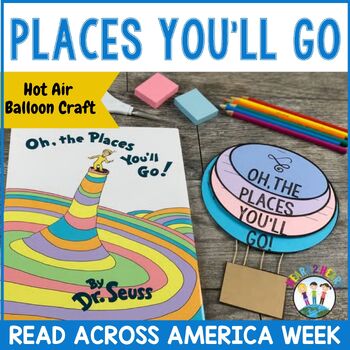
    Students will love creating this Hot Air Balloon Flip Up Craft after reading the book “Oh, The Places You’ll Go” by Dr. Seuss. Simply, print pages on different colored cardstock and let the students mix and match to create a one of a kind hot air balloon.

    What’s included:
    ►Templates to create a 4-page Hot Air Balloon Flip Up Craft
    ►Different questions and options for each page
    ►Colorful Poster with a quote from the book
    ►A separate page with additional Comprehension Questions
    ►Directions and sample photos

    For each page of the craft, there are two options to mix and match questions.
    Here are the questions that are included:
    ►Where do you want to go or see in the future? Name five places below.
    ►What do you think is the theme of the story?
    ►What do you want to do when you grow up?
    ►Name three new things you want to learn how to do
    ►Would you ever want to go in a hot air balloon? What do you think it would be like?
    ►What is the most exciting place that you’ve ever been to?
    ►What does it mean by “Kid, you’ll move mountains”?

    Directions:
    ►Read the story, Oh, The Places You’ll Go by Dr. Seuss.
    ►Print out the Hot Air Balloon pages on colored card stock pages. I like to use different colored card stock and let the students mix and match as desired.
    ►Have the students answer the questions on each page (circle) and share their answers with the class.
    ►Build the flip up balloon so that each circle overlaps at the top and staple it at the top of the balloon.
    ►Tape 4 strings, twine, or ribbons to the back of the basket and to the back of the largest circle so that the word “GO!” is in the middle.
    ►Add a second basket on the backside to hide the strings and give it added support.
    ►Display your hot air balloons around the classroom or on a bulletin board if desired. You can use the poster with the quote from the book as part of the display.

    What a fun activity to accompany such an inspirational book.

  • The Life Story of Harriet Tubman Activity Pack

    The Life Story of Harriet Tubman Activity Pack

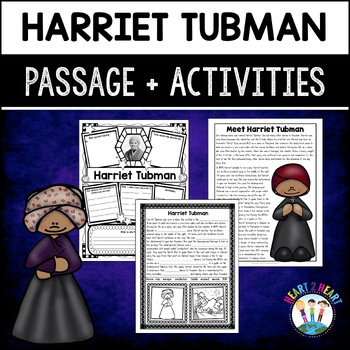
    Your students will love learning about one of the most inspirational women of all time. Harriet Tubman was an inspirational leader and humanitarian.

    This biography unit has it all! There are a variety of activities for you to teach about Harriet Tubman’s life story. This could be a week-long unit or as short as a day or two, depending on the time allotted and the needs of your students. There are several ways to use this unit to differentiate for students.

    Activities included:
    ✔ Meet Harriet Tubman
    ✔ Fact or Fiction Activity
    ✔ Character Mini-Booklet w/Timeline Sorting Activity—fits inside their notebooks!
    ✔ Biography Organizers
    ✔ Character Traits Activity
    ✔ Plus a 5-page Flip Book
    ✔ Quiz
    ✔ Answer Keys
    ✔ Vocabulary Posters for important character traits:
    Strong, Brave, and Selfless

    Reading:
    Have students read the passages about where they will meet Harriet Tubman and learn all about her life. There’s also a custom-created biography organizer to use for review or for further research.

    Suggestions and Ideas for centers:
    ✔ Have students read the Meet Harriet Tubman passage OR Life Story passages with scenes and questions. Then answer the questions on the biography organizers.
    ✔ Have students complete the character mini-booklet with timeline dates. These fit nicely inside their notebooks.
    ✔ Have students complete the character traits activity using the vocabulary posters as a guide and then complete the Venn diagram to compare Sojourner to themselves.

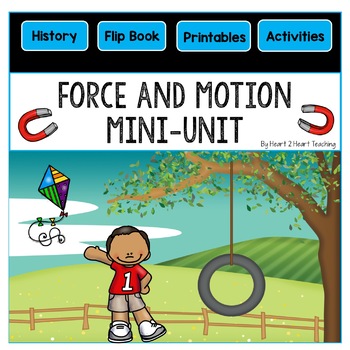
  • Force and Motion Mini-Unit & Flip Book

    Force and Motion Mini-Unit & Flip Book

    This mini-unit is the perfect addition to accompany your unit on Force and Motion.

    It includes the following activities:
    ⭐ A fact sheet that comes in full color and BW
    ⭐ A flip book (5-pages)
    ⭐ A Vocabulary Poster

    The 5-page flip book has pages about push or pulls, gravity, Newton’s Laws, and magnetism all related to the study of Force and Motion. Visual directions for making the flip books are included.

    Flipbooks are fun and valuable learning tools that can be used in:
    ✔ Centers
    ✔ Station Work
    ✔ Interactive Notebooks
    ✔ Group Work
    ✔ Fun Projects
    ✔ Homework Assignment
    ✔ Review Work

    Students flip for flipbooks!

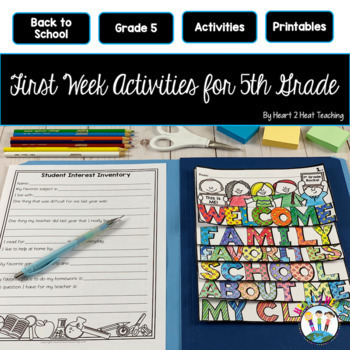
  • First Week of School Activities for 5th Grade

    First Week of School Activities for 5th Grade

    Welcome your students to the 5th grade with these fun activities. It includes several activities for the first week of school that are specifically designed for fifth graders.

    It includes:
    ✔ Welcome to 5th Grade Flip Book (6-pages)
    ✔ Welcome to 5th Grade Bookmarks
    ✔ Name Poem Activity
    ✔ Subway Art Classroom Rules Poster
    ✔ Goal-Setting Activities
    ✔ All About Me Activities
    ✔ Student Interest Inventory
    ✔ Welcome to 5th Grade Banner

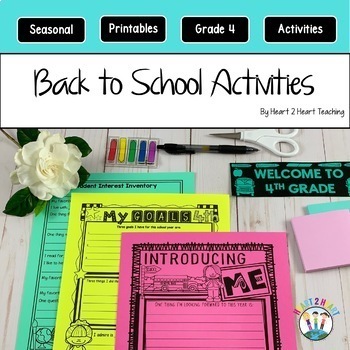
  • First Week of School Activities for 4th Grade

    First Week of School Activities for 4th Grade

    Welcome your students to the 4th grade with these fun activities. It includes several activities for the first week of school that are specifically designed for fourth graders.

    It includes:
    ✔ Welcome to 4th Grade Flip Book (6-pages)
    ✔ Welcome to 4th Grade Bookmarks
    ✔ Name Poem Activity
    ✔ Subway Art Classroom Rules Poster
    ✔ All About Me Activities
    ✔ Ready.Set.Go! Goal-Setting Activities
    ✔ Student Interest Inventory
    ✔ Welcome to 4th Grade Banner

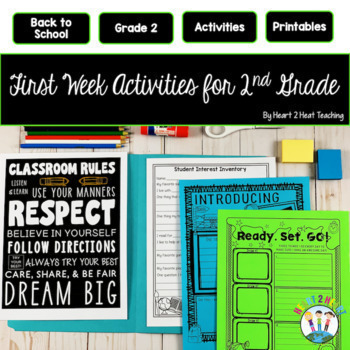
  • First Week of School Activities for 2nd Grade

    First Week of School Activities for 2nd Grade

    Welcome your students to the second grade with these fun activities! It includes several back to school activities specifically designed for second graders.

    It includes:
    ✔ Welcome to 2nd Grade Flip Book (6-pages)
    ✔ Welcome to 2nd Grade Bookmarks
    ✔ Name Poem Activity
    ✔ Subway Art Classroom Rules Poster
    ✔ First Day of School Activity
    ✔ Goal-Setting Activity
    ✔ Student Interest Inventory
    ✔ Welcome to 2nd Grade Banner

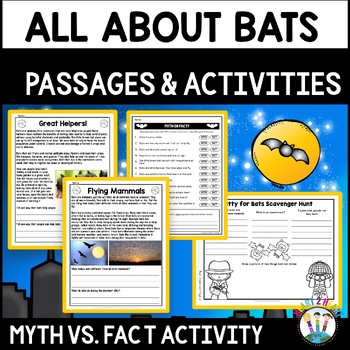
  • All About Bats Nonfiction Reading Passages Bat Life Cycle & Bat Facts Worksheets

    All About Bats Nonfiction Reading Passages Bat Life Cycle & Bat Facts Worksheets

    All About Bats is a complete nonfiction bat unit for 3rd and 4th grade. This no prep printable packet is built around 4 nonfiction reading passages about bats with real life photos, a bat life cycle activity, myth vs. fact activity, vocabulary posters and activities, and a fiction story with comprehension questions.

    What’s Included:
    • 4 nonfiction reading passages

    • Myth vs. Fact Activity

    • Comprehension Questions
    • Bat life cycle activities
    • Research organizer for what bats eat, live, and how mammals are alike
    • Compare and contrast activities
    • Meet three bats: Buddy Boo the little brown bat, Berry Boo the fruit bat, and Bitty Boo the western pipistrelle
    • An Uninvited Guest, a fiction story about a bat that gets into the house
    • Cause and effect activity

    • Unit Test

    • 4 Writing Prompts: Narrative, Informative and Opinion Writing
    • Vocabulary posters and activities
    • A Flip Book
    • Complete Answer Keys

    Why You’ll Love It:

    • Zero prep. Print it and teach it today.
    • Nonfiction and fiction in one unit

    • Integrate science and reading at the same time
    • Black and white printing friendly

    • Myth vs. Fact Activity about Rabies
    • Works for whole group, small group, science centers, early finishers and sub plans