Topic: Photosynthesis

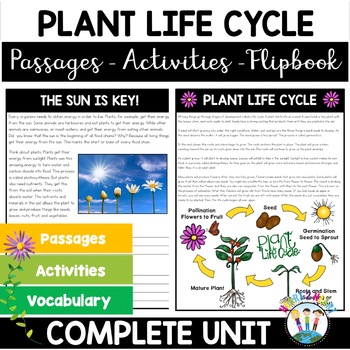
  • From Seed to Sprout: The Life Cycle of a Plant Activity Pack

    From Seed to Sprout: The Life Cycle of a Plant Activity Pack

    Students will love learning all about plants and the plant life cycle with this hands-on activity pack! In this unit, there are reading passages, comprehension questions, fun activities, vocabulary posters, and a flip book!

    The life cycle of a plant shows the different stages that occur in a plant’s life. All plants start out as a tiny seed.

    This unit includes reading passages about:
    ⭐ Plants get Energy from the Sun
    ⭐ The Balance of Nature
    ⭐ Plant Life Cycle
    ⭐ Photosynthesis

    There are lots of hands-on activities for students to complement this unit including:
    ✔ Comprehension questions
    ✔ Organizers
    ✔ Life Cycle Diagram
    ✔ Plant Fact Flaps -Great for their science notebooks!
    ✔ Flip Booklet
    ✔ Vocabulary Photo Posters
    ✔ Spotlight on Vocabulary

    There are three main activities in this unit:

    Reading:
    Read the passages about plants, plant life cycle, and photosynthesis and answer the questions on the organizers and label the Plant Life Cycle diagram.

    Hands-on Activities:
    Plant Fact Flaps:
    Students read the statements to determine which of the statements are true. Then they cut and paste the facts underneath the flaps inside their notebooks.

    Plants Flip Book:
    Answer the questions on each page of the flip book. Then cut, color, and assemble the booklet. Flipbooks are an excellent center activity for students to show what they know.

    Vocabulary Activities:
    Print out the vocabulary posters in color or black and white. Post them on a bulletin board or around the classroom. Make copies of the Spotlight on Vocabulary. Have students write the definition or to write a sentence using the word.
    There are two different versions included:
    One has an empty box for students to draw their own illustrations related to the word.
    One has an image for them to color and visualize.
  • Let’s Learn All About the Amazon Rainforest PowerPoint

    Let’s Learn All About the Amazon Rainforest PowerPoint

    This artfully designed presentation has 62 slides that are very engaging for students to learn about the Amazon Rainforest! This is a great compliment to any Rainforest Unit.

    This Rainforest PowerPoint product highlights many science topics such as:
    1. Ecosystems
    2. Photosynthesis
    3. Deforestation
    4. Camouflage
    5. Animal Adaptations
    6. Layers of the Rainforest
    7. The Importance of the Amazon Rainforest
    8. Poison Dart Frogs
    9. Three Toed Sloths
    10. Jaguars

    With this product, students learn about the Amazon Rainforest as well as other topics related to science, animals, and the environment.

    This presentation includes everything you need to teach, investigate, and learn all about the Amazon Rainforest with slides of information on:
    ✔ Four Layers of the rainforest
    ✔ Animals of the Rainforest
    ✔ Poison Dart Frog
    ✔ Three Toed Sloths
    ✔ Jaguars
    ✔ Rainforest Deforestation
    ✔ Ecosystem
    ✔ Photosynthesis
    ✔ 6 Question Rainforest Quiz with answers
    ✔ For Elementary Grades – Second grade, Third grade, and Fourth grade
    ✔ Core Knowledge and Common Core Aligned

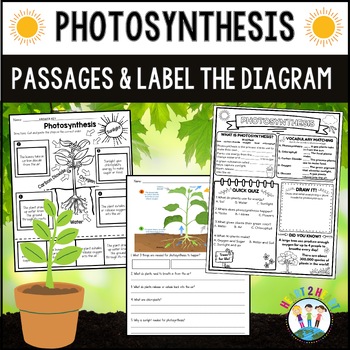
  • Photosynthesis Activities Reading Comprehension Worksheets Label the Diagrams

    Photosynthesis Activities Reading Comprehension Worksheets Label the Diagrams

    Photosynthesis activities & worksheets including reading comprehension passages, label the diagrams, a cloze passage, vocabulary posters and more. Read and practice putting the photosynthesis process in order through a variety of activities. Great for Science binders or interactive notebooks too!

    What’s Inside:

    ✔ Two Reading Passages on the photosynthesis process

    ✔ Photosynthesis Doodle Notes

    ✔ Cloze Passage to reinforce key terminology
    ✔ Constructed-Response Questions for deeper thinking
    ✔ Summarizing Activity to practice concise explanations
    ✔ Sequencing Activity to order the steps of photosynthesis
    ✔ Vocabulary Posters spotlighting terms like “chlorophyll,” “carbon dioxide,” and “glucose”
    ✔ Spotlight on Vocabulary Exercises for matching and context clues
    ✔ Answer Keys

    ❤️ Why You’ll Love It:

    • Multi-Modal Learning: Combines reading, writing, and diagram labeling to reach all learners.
    • No Prep: Print-and-go pages keep your lesson planning stress-free.
    • Standards-Aligned: Reinforces NGSS 5-LS1-1 concepts and CCSS literacy skills.
    • Perfect for Notebooks: Activities fit into interactive science journals or binders.
    • Built-In Differentiation: Mix and match passages, cloze activities, and constructed responses to suit varied ability levels.

    Frequently Asked Questions:

    Q: What grade levels is this best for?
    A: Ideal for Grades 3–6, but easily adapted for upper or lower grades by adjusting discussion depth.

    Q: How much prep is required?
    A: Very little, just print the pages you need and you’re ready to teach.

    Q: Are answer keys included?
    A: Yes, answer keys accompany this unit.

    Q: Can I use these materials in an interactive notebook?
    A: Absolutely! The sequencing and diagram-labeling activities are notebook-friendly.

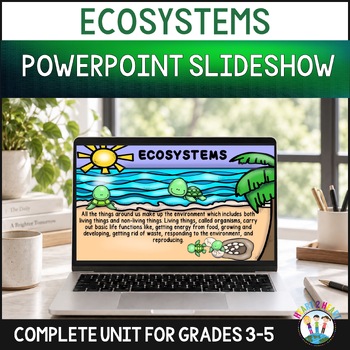
  • Ecosystems Powerpoint

    Ecosystems Powerpoint

    This 100 slide presentation is artfully designed to complement your unit on Ecosystems!

    An ecosystem can be huge like the Amazon Rainforest or as small as a puddle in your backyard. There are both living and non-living things make up an ecosystem.

    This unit is geared for 3rd grade, 4th grade, and 5th-grade students. It includes information about the following environmental science topics:
    ✔ Types of Ecosystems (Micro, Messo, Biomes)
    ✔ Biomes: Aquatic and Terrestrial
    ✔ Abiotic and Biotic
    ✔ Herbivores, Carnivores, and Omnivores
    ✔ Natural Cycles of Earth
    ✔ The Balance of Nature
    ✔ Producers, Consumers, and Decomposers
    ✔ Photosynthesis
    ✔ Animals Basic Needs
    ✔ Food Webs & Chains
    ✔ For Upper Elementary Grades – Third grade, Fourth grade, Fifth grade
    ✔ Common Core Aligned

    This Ecosystems Slideshow Presentation includes a:
    100 slide PowerPoint all about Ecosystems—with colorful clipart and real-life photos. There are slides on each concept with comprehension questions and vocabulary slides, too!

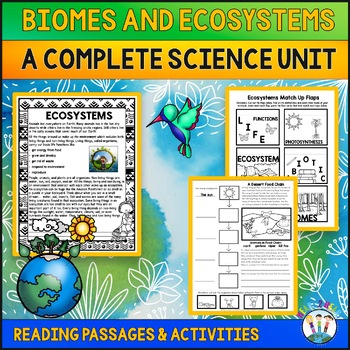
  • Biomes and Ecosystems Worksheets 3rd-5th Grade Food Chains Webs Photosynthesis

    Biomes and Ecosystems Worksheets 3rd-5th Grade Food Chains Webs Photosynthesis

    3rd, 4th, 5th Grade Ecosystems reading passages, activities, and worksheets. With this BEST SELLER, kids will learn all about the different types of ecosystems, biomes, food chains, food webs, photosynthesis, producers, consumers, decomposers, animal needs, herbivores, carnivores, and omnivores, and how they interact with each other.

    Topics Covered:

    • Types of Ecosystems (Micro, Meso, Biomes)
    • Biomes: Aquatic and Terrestrial
    • Abiotic and Biotic
    • Herbivores, Carnivores, and Omnivores
    • Natural Cycles of Earth
    • The Balance of Nature
    • Producers, Consumers, and Decomposers
    • Photosynthesis
    • Animals Basic Needs
    • Food Webs and Food Chains

    With Lots of Engaging Activities

    • Tri-fold (Brochure) Organizers for INBs
    • Comprehension Questions
    • Flipbook (5-pages)
    • Photosynthesis Sequence Activity
    • Producers, Consumers, Decomposers Notebook Flaps
    • Ecosystems Match-up Flaps
    • Video Links shared on YouTube
    • Cloze Passages
    • Vocabulary Posters
    • Vocabulary Flip Flaps
    • Spotlight on Vocabulary
    • Rainforest Food Chain Activity
    • Desert Food Chain Activity
    • Fact or Fiction Activities
    • Teacher’s Pacing Guide
    • Unit Test (Easel Assessment)
    • Answer Keys
    • Diagrams for Photosynthesis
    • Diagrams for Food Chains
    • Plus students will meet a famous environmentalist, John Muir

    ❤️ Why Teachers Love It:

    ✅ Easy to Implement – Ready-to-go with pacing guide and answer keys

    ✅ Cross-Curricular – Builds science knowledge and literacy skills

    ✅ Supports Diverse Learners – Variety of formats, hands-on, and includes visuals

    ✅ Encourages Critical Thinking – Students explore cause and effect, interdependence, and food chains

    ✅ Promotes Environmental Awareness – Helps students understand the importance of balance in nature

    Frequently Asked Questions:

    Q: What grade levels is this unit best suited for?
    A: This unit is ideal for grades 2–4 and can be adapted for 5th graders. The materials include visuals, interactive elements, and leveled support to accommodate diverse learners.

    Q: Is this unit aligned with science standards?
    A: Yes! It aligns with NGSS, CCSS ELA, TEKS, and VA SOL for ecosystems, food chains/webs, producers/consumers/decomposers, and environmental awareness.

    Q: Can I use this with interactive notebooks?
    A: Absolutely! The flipbook, flaps, tri-folds, and match-up activities are all designed for use in interactive notebooks or as stand-alone learning tools.

    Q: Are answer keys and a pacing guide included?
    A: Yes! A full teacher pacing guide and answer keys for all major activities and the unit test are included.

    Q: Is there resource digital version available?
    A: Yes! You can find a DIGITAL version of this resource is available for Google Classroom here.

    This ecosystem unit is perfect for science centers, whole-group instruction, or independent learning. It’s ideal for grades 3–5 and will save you hours of planning while keeping your students engaged and excited about science.

  • Be a Super Science Sleuth: Ecosystems Scavenger Hunt

    Be a Super Science Sleuth: Ecosystems Scavenger Hunt

    Students will love this fun scavenger hunt to learn about ecosystems, photosynthesis, abiotic, biotic, carnivores, omnivores, and herbivores.

    This mini-unit includes seven short passages with real-life photos to post around the classroom. Using the two organizers and a clipboard students act as detectives to track down the answers to the questions.

    This is a wonderful way to get students actively involved with the information literally by getting them up and out of their seats.

    If desired, you could do this as a stations or centers activity too! This works fantastic as an introduction at the beginning of the unit or as a review activity. It’s perfect for partners or group work.

    Little prep work to save you time:
    ✔ Print posters and organizers
    ✔ Copy two scavenger hunt organizers back to back
    ✔ Post posters around the classroom (or at stations/centers)
    ✔ Assign partners or groups
    ✔ Hand out scavenger hunt organizers and clipboards
    ✔ Set timer (about 5-8)
    ✔ Have students rotate to the next spot

    There is an additional ”ECOSYSTEMS” acrostic chart for students to write down one fact for each letter. This works well for fast finishers or as an additional challenge activity. Hope your students love this activity as much as mine do! Answer keys are included.

    This set includes:
    ⭐ 7 Ecosystem Passage Posters
    ⭐ Ecosystems Scavenger Hunt Organizers (2 pages)
    ⭐ Ecosystems Acrostic Chart to collect 10 additional facts
    ⭐ Answer Key

    This set includes information and questions about the following topics:
    ✔ What is an Ecosystem?
    ✔ Abiotic and Biotic
    ✔ Herbivores, Carnivores, and Omnivores
    ✔ Photosynthesis
    ✔ Habitats and Adaptations
    ✔ Producers, Consumers, & Decomposers
    ✔ Basic Needs and Survival